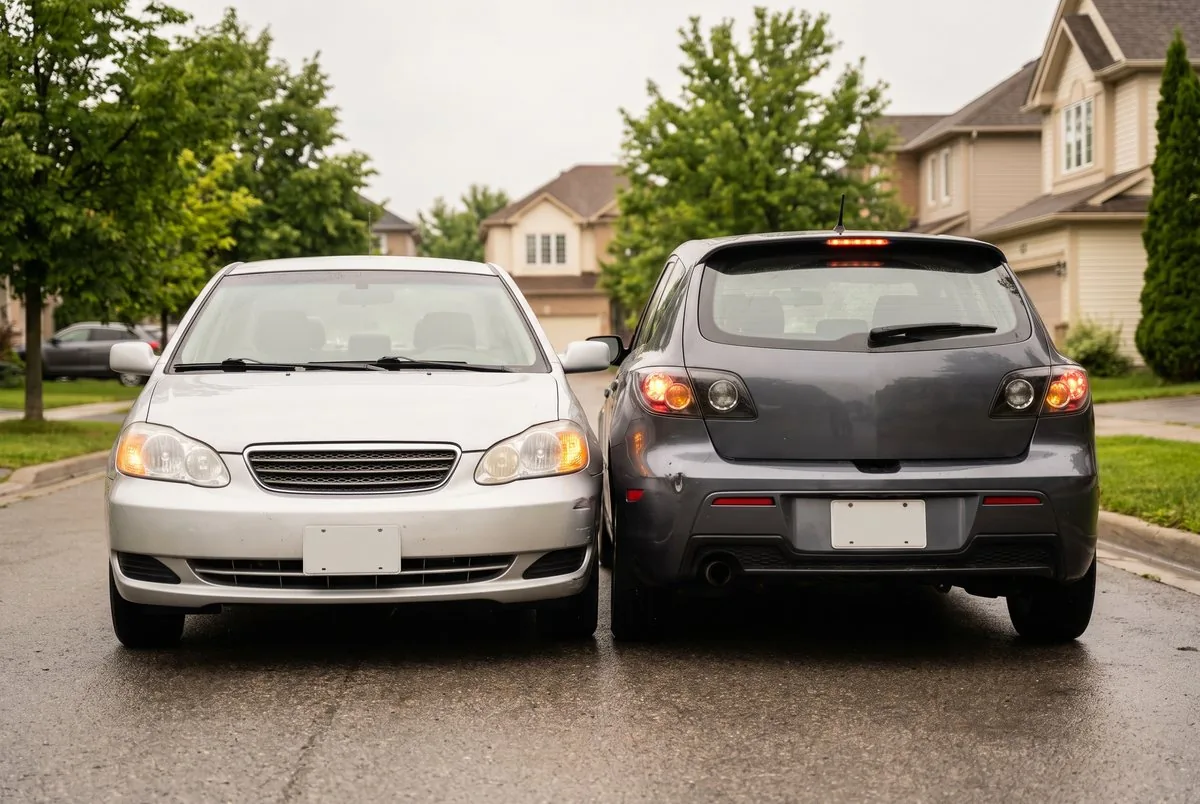
In Utah, PIP (Personal Injury Protection) is the part of your own auto policy that pays your crash-related medical bills first, no matter who was at fault. You open a PIP claim with your insurer, your provider bills that claim directly, and the benefit is at least $3,000 with no deductible — so care is often $0 out of pocket.
This article is reviewed by Dr. Cody Mecham and follows the site's editorial policy. You can review Dr. Mecham's background and certifications for provider context. It is educational only — not medical or legal advice.
Utah is a no-fault state for medical bills. That means your own PIP coverage pays your injury care first and the fault argument happens separately, on its own timeline. The practical sequence is short: call your insurer, open a PIP claim, get the claim number, get examined, and let the clinic bill the claim.
- PIP is required on every Utah auto policy (Utah Code §31A-22-307)
- At least $3,000 in medical benefits per person, with no deductible
- Pays regardless of who caused the crash
- Your provider bills the PIP claim directly — you do not pay and wait
What PIP Is, in One Paragraph
Personal Injury Protection is a required piece of every Utah auto insurance policy. If you are hurt in a crash, your own PIP pays for your medical care first — regardless of who caused it — up to your policy limit. Utah's minimum is at least $3,000 per person under Utah Code §31A-22-307, and there is no deductible on PIP medical benefits. That combination is why crash-related care is so often $0 out of pocket to the patient. If you want that $3,000 number unpacked on its own, we did that in what the $3,000 threshold in Utah actually means.
Why Utah Pays Your Bills Before Deciding Fault
The system is built this way on purpose. Fault takes time to establish. Police reports, statements, and adjuster reviews can take weeks, and injuries do not wait weeks. So Utah requires every driver to carry coverage that treats them first and argues later.
Fault still matters — for vehicle damage and for any larger claim — but it does not have to hold up your medical care. This is the single most useful thing to understand after a crash, because the most common mistake we see is a patient sitting at home in pain waiting for the other driver's insurance company to call. That call is not what unlocks your treatment. Your own policy already did.
How PIP Works, Step by Step
Here is the actual sequence, in the order it happens:
- 1. Handle emergencies first. Loss of consciousness, confusion, severe headache, trouble breathing, severe neck pain, or weakness or numbness in the arms or legs means 911 or an emergency room — not a wait-and-see.
- 2. Document the crash. Photograph the vehicles and the scene, file a police report even for a minor collision, and exchange information with the other driver.
- 3. Call your own insurer and open a PIP claim. This is the step people skip. Say plainly: "I was in an accident and I want to open a PIP claim." Ask for the claim number and write it down.
- 4. Get examined early. Ideally within the first few days, even if you feel mostly fine. Adrenaline hides injury, and whiplash symptoms often peak around 48 to 72 hours after impact.
- 5. Give the clinic your claim information. The claim number, your insurer, and the date of the crash are usually all that is needed to start billing.
- 6. The clinic bills your PIP directly. Care related to the crash goes to the auto insurer, not to you. Because there is no deductible, eligible visits are commonly $0 out of pocket.
- 7. Treatment continues while the benefit lasts. Your provider tracks how much of the benefit has been used and should tell you well before you approach the limit.
The Free PIP Injury Check is a thorough, documented injury exam with Dr. Mecham — billed directly to your Utah PIP, so you pay nothing out of pocket. We verify your benefits first and handle 100% of the paperwork. 5.0 from 435 Google reviews · Concussion-trained DC · Same-week appointments.
Book My Free PIP Injury Check →What PIP Covers — and What It Does Not
PIP is designed around the immediate, reasonable medical needs of an injured person. For chiropractic and related care, that generally covers your initial injury exam, treatment of crash-related injuries such as whiplash and neck and back pain, necessary imaging referrals when the findings warrant them, and clear written documentation of what was found.
Utah PIP also includes other limited categories — for example, a portion of lost wages and certain other expenses — each up to separate sub-limits set by statute. What PIP does not do is repair your car, and it is not a settlement. Vehicle damage and any broader injury claim run on their own track. And no article can promise what your specific policy pays: coverage always depends on your individual policy, which is why we verify benefits before care begins rather than assuming.
Can PIP Be Subrogated in Utah?
Subrogation is the insurance industry's word for one insurer seeking repayment from another. In a car accident, it usually describes your own insurer trying to recover what it paid out from the insurer of the driver who caused the crash.
Whether, when, and how that plays out in Utah depends on the policies involved and on how the claim is resolved. That is a question for your insurance carrier or a qualified Utah attorney — not for a chiropractic office, and not for a web page. Two things are still worth knowing as a patient. First, reimbursement between insurers is generally handled inside the claim, between the companies and the lawyers, rather than being something you personally administer. Second, none of it has to happen before you are treated: your PIP is built to pay your medical care up front. If you are pursuing a claim against another driver, ask your attorney specifically how reimbursement between carriers could affect your settlement, and get the answer before you sign anything.
What If You Also Have Health Insurance?
Many people do, and the two are not the same thing. PIP is the auto-side coverage designed to respond first to crash injuries, and it is the one with no deductible. Health insurance may still have a role depending on your circumstances — particularly if PIP benefits are exhausted — but how the two interact depends on your specific policies. Ask your carriers, and tell your provider's office about both so nothing gets billed in the wrong order.
What If You Were a Passenger, or Not in Your Own Car?
This comes up constantly, and the honest answer is that it depends on the policies involved. Coverage for passengers, for people driving a car they do not own, and for pedestrians is determined by which policies apply to that situation. Do not assume you are uncovered because the car was not yours. Call the insurer for the vehicle you were in, call your own carrier if you have one, and ask both whether a PIP claim can be opened for you. Our office is happy to help you make those calls — sorting out which claim to bill is routine work for us.
What If the Other Driver Was Clearly at Fault?
It does not change the first step. Your own PIP still pays your medical care first. You do not need the other driver's insurer to accept liability, return a call, or agree with your version of events before you get examined. Fault gets handled separately, and your early medical record is one of the things that supports your side of it. The full breakdown of who pays and in what order lives here: who pays for the chiropractor after a car accident in Utah.
The Mistakes That Cost People Their Benefit
- Never opening the claim. PIP does not activate on its own. Somebody has to call.
- Waiting weeks to be seen. The longer the gap between the crash and your first exam, the more room an insurer has to argue the injuries came from something else.
- Assuming "I feel fine" means uninjured. Soft-tissue injury is frequently painless for the first day or two. Our whiplash symptom checklist covers the delayed signs, and the concussion-or-whiplash guide helps separate head-injury symptoms from neck injury.
- Paying out of pocket without asking. If a clinic asks you for a card before checking your PIP, ask why.
A Local Note for Salt Lake Valley Drivers
We treat crash patients out of 4700 South 900 East #16 in Millcreek, and the pattern is remarkably consistent: a low-speed rear-end hit on I-15 or an intersection impact on State Street, no visible damage worth mentioning, and a patient who felt fine until day three. Get the claim opened and get examined while the record is still fresh. See what treatment looks like on our Murray auto accident chiropractor and Salt Lake City auto accident chiropractor pages, or read the cluster's main guide, does Utah insurance cover a chiropractor after a car accident.
Related Reading
- → Free PIP Injury Check (Utah) — $0, We Handle the Paperwork
- → What Is the $3,000 Threshold in Utah?
- → Who Pays for the Chiropractor After a Car Accident in Utah?
- → Does Utah Insurance Cover a Chiropractor After a Car Accident?
- → What to Do After a Car Accident
- → Concussion or Whiplash? Decision Guide
- → Auto Accident Chiropractor Murray, UT
- → Auto Accident Chiropractor Salt Lake City, UT
Hurt in a crash anywhere in the Salt Lake Valley? Get a thorough, documented injury exam billed directly to your Utah PIP — $0 out of pocket, with our office handling every form. 5.0 from 435 Google reviews · Call (801) 590-8615 or book below.
Book My Free PIP Injury Check →Utah PIP Questions Patients Ask Most
How does PIP work in Utah?
Utah is a no-fault state for medical bills, so your own Personal Injury Protection pays your crash-related medical care first regardless of fault. You open a PIP claim with your own auto insurer, give your provider the claim number, and the provider bills that claim directly. The benefit is at least $3,000 per person with no deductible, so eligible care is commonly $0 out of pocket.
Can PIP be subrogated in Utah?
Subrogation means one insurer seeking repayment from another — typically your insurer recovering what it paid from the at-fault driver's insurer. Whether and how that applies depends on the policies involved and how the claim resolves, so it is a question for your carrier or a qualified Utah attorney. As a patient, the important part is that it is generally handled inside the claim and does not have to happen before you get treated.
Do I have to open the PIP claim myself?
Someone has to open it, and the fastest path is calling your own auto insurer and asking to open a PIP claim for the accident. Our office can then verify your benefits, bill the claim directly, and complete the medical paperwork, so you are not chasing forms while you are hurt.
Does Utah no-fault insurance cover a chiropractor?
PIP medical benefits generally cover reasonable crash-related medical care, and chiropractic evaluation and treatment for injuries such as whiplash and neck or back pain fall within that. Coverage always depends on your individual policy, which is why benefits are verified before care begins.
How long do I have to use my PIP benefits after a crash?
Rather than relying on a general rule, treat it as urgent for two reasons: injuries are easier to treat early, and a long gap between the crash and your first exam gives an insurer room to question whether the injuries came from the accident. Ask your carrier about any timing requirements that apply to your specific policy.
Will using PIP raise my insurance rates?
That is a question only your insurance carrier can answer for your policy, and it depends on the carrier and the circumstances of the claim. What we can say is that PIP is coverage you are already required to carry and already pay for, and it exists precisely so injured drivers get care without a fault fight first.
What happens when my PIP benefits run out?
It depends on your other coverage and your circumstances — other policies, health insurance, or a claim against the at-fault driver may come into play, and none of that is automatic. Our office monitors your benefit as care progresses and talks through the options with you before you reach the limit, not after.
Important — Please Read
This page is general information about Utah auto insurance and injury care. It is not legal advice, not medical advice, and not a diagnosis, and it does not create a doctor–patient or attorney–client relationship. Coverage depends entirely on your individual policy and your circumstances — nothing here is a guarantee of coverage, payment, or any outcome. For questions about what your policy pays, contact your insurance carrier; for legal questions about a claim, consult a qualified Utah attorney; for a medical concern, consult a licensed healthcare professional. If this is an emergency or you have severe symptoms (loss of consciousness, severe headache, numbness, trouble breathing), call 911 now. Our office handles insurance billing and paperwork and coordinates with your attorney if you have one — we do not provide legal representation.
Sources
- Utah Code §31A-22-307 — Personal injury protection coverages (minimum PIP benefits). le.utah.gov
- Spitzer WO, et al. Scientific monograph of the Quebec Task Force on Whiplash-Associated Disorders. Spine. 1995. PMID 7770078