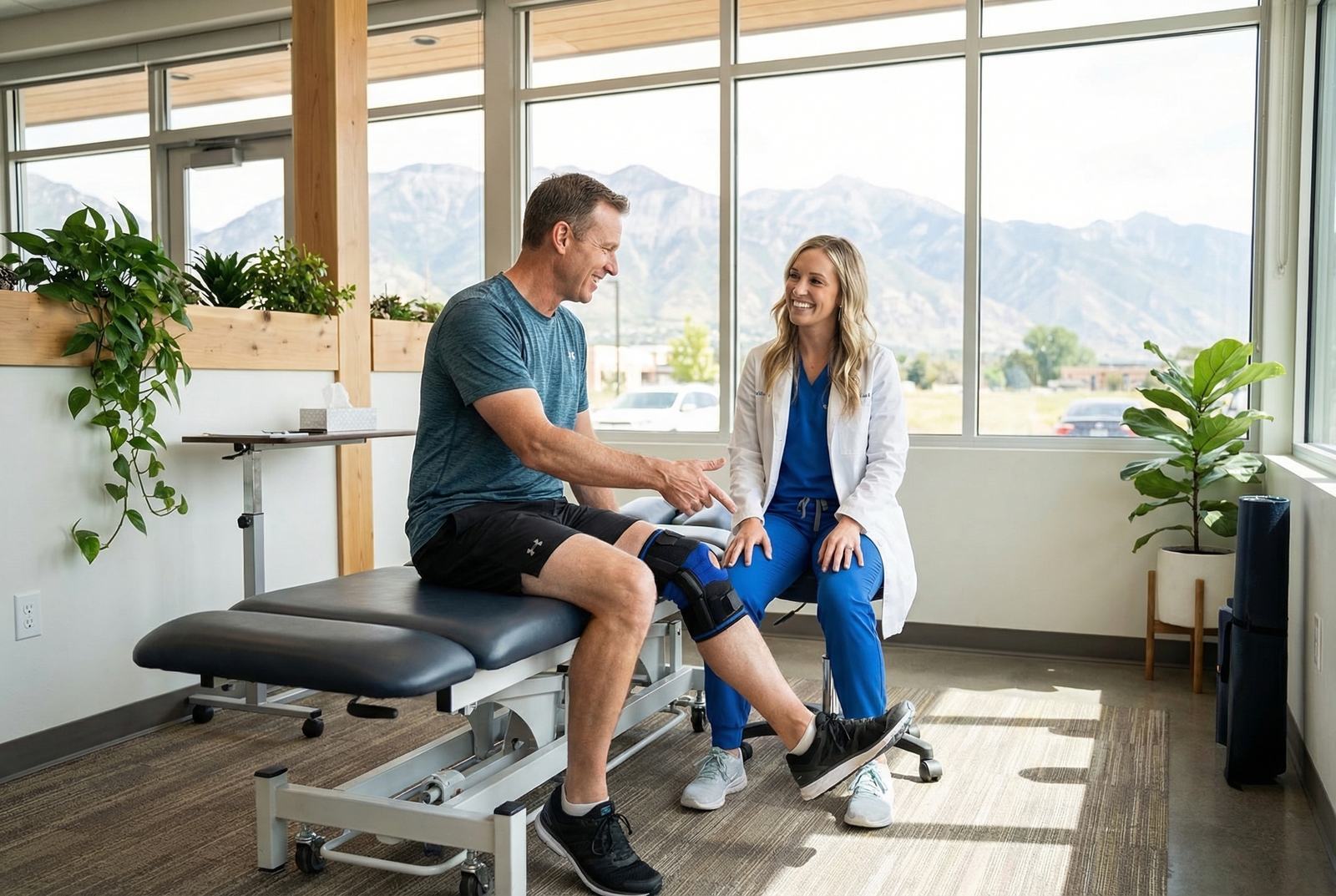
Sports Injury Chiropractor in Murray, UT
Sports injury care for runners, lifters, skiers, and active adults
Sports injury care for runners, lifters, skiers, and active adults
Sports injuries rarely happen at a convenient time. They show up during a training block, before a race, in the middle of ski season, or right when you finally start feeling strong again. Whether you run, lift, hike, ski, bike, or play recreational sports, the goal is not only to calm the pain down. It is to figure out why the problem started and what needs to improve before you load the area again.
At Mecham Chiropractic, Dr. Cody Mecham works with active patients in Murray and nearby Salt Lake Valley communities who need a practical recovery plan. Care focuses on joint motion, soft tissue restrictions, loading tolerance, and return-to-sport progress so you are not guessing your way back into activity.
Dr. Mecham's sports-focused background includes Certified Chiropractic Sports Physician training, extremity-focused training, and concussion-related education that supports evaluation of both performance injuries and post-impact concerns. You can review the full list on the Dr. Cody Mecham certifications page.
Repetitive mileage, weak hip control, and limited ankle motion often show up as outer knee pain. Treatment focuses on the joints and tissues that are overloading the knee so each step feels more stable again.
Overhead athletes and lifters often develop pain when the shoulder, rib cage, and upper back stop moving well together. We address the entire chain instead of only chasing sore tissue.
Plantar fasciitis, arch strain, and ankle stiffness can shut training down fast. We combine manual treatment, gait-related recommendations, and when appropriate, support from our foot pain and orthotics care.
Tendon pain often returns when the same movement problem stays in place. That is why golfers, tennis players, lifters, and cyclists usually need more than rest alone.
We start by looking at more than the sore spot. The exam is built to identify what movement or load is actually driving the problem.
You do not need to wait until training becomes impossible. It is worth scheduling an evaluation if:
We know you want to get back to your sport quickly. Our phased approach is designed for speed and safety:
Feeling better is not the same as being ready. Before you ramp back up, we look at whether you can tolerate speed, volume, and sport-specific positions without compensation. That matters for runners increasing mileage, lifters returning to heavy pulls, and skiers trying to avoid another setback halfway through the season.
Patients often do best when they have a simple progression to follow. We help you know when to back off, when to build, and which warning signs mean the injury is not actually ready for full return.
Book a Sports Injury EvaluationOur Murray office is convenient for athletes and active adults coming from Holladay, Millcreek, Sugar House, South Salt Lake, and nearby communities. If you're searching for a chiropractor near you in Murray or anywhere in the Salt Lake Valley, our office is conveniently located and easy to reach from most neighborhoods.
This page supports patient education and local service discovery. It is reviewed against the site's editorial policy, connects to Dr. Cody Mecham's background and certifications, and is paired with supporting content on the blog and education hub.
Usually not. If pain changes your movement or gets worse after activity, you are more likely to build a compensation pattern than to train productively.
Yes. Runners often benefit when hip motion, pelvic control, ankle mobility, and tissue load are addressed together instead of only treating the pain site.
Yes. We commonly see shoulder pain, back pain, hip pinching, and recurring mobility limits in active lifters and gym athletes.
That depends on the injury and how you respond to care, but we help guide a gradual return so you are not guessing when it is safe to increase volume or intensity.
Chronic injuries are common in active adults. The key is identifying what is still overloading the area and fixing the movement and tissue restrictions that never fully resolved.
No. We treat active adults at every level, from weekend hikers and gym-goers to high school athletes and experienced competitors.
Yes. Ankle sprains often leave behind stiffness, instability, and altered mechanics that can affect the knee, hip, and back if they are not fully restored.
Yes. Many overuse injuries improve when the joint restrictions, tissue overload, and movement problems feeding them are addressed.
Not always. Some injuries need a full pause, while others do better with modified training and a clear loading plan.
Yes. Running injuries often respond well when stride mechanics, hip control, ankle motion, and tissue load are all considered.