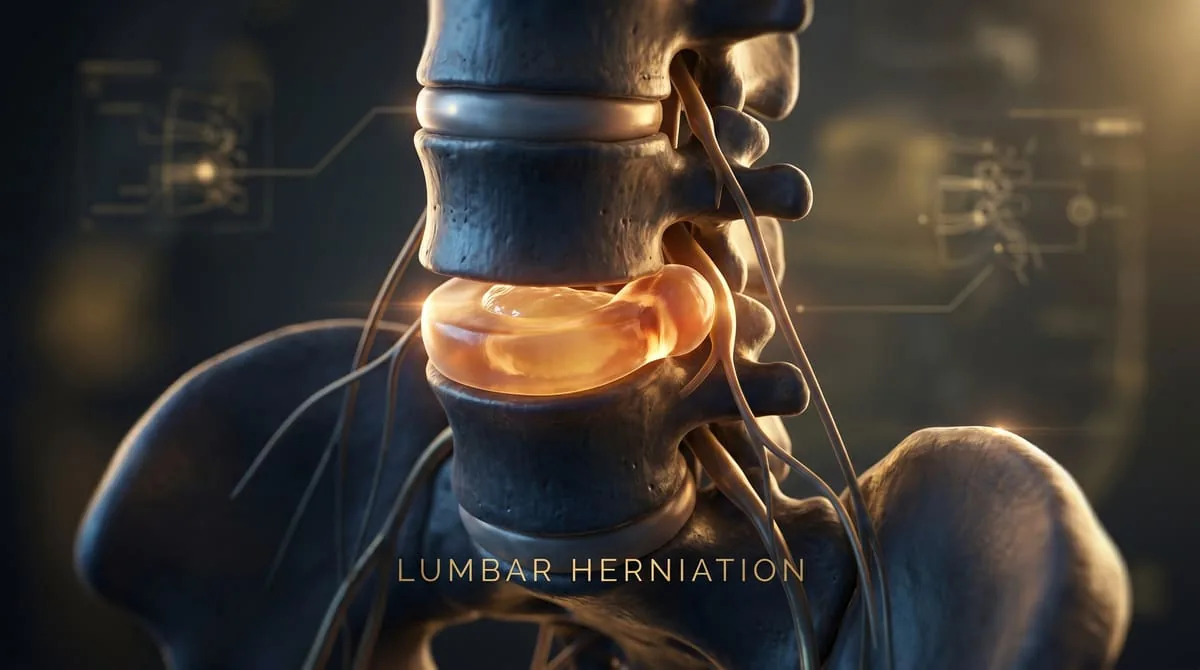
Yes — for most patients a bulging or herniated disc responds to conservative care, and a disc diagnosis does not automatically mean surgery. Chiropractic combined with targeted rehabilitation is among the most effective first-line treatments. Most acute disc patients notice meaningful pain reduction within the first 2–4 weeks of consistent care.
- Bulging disc: the outer wall protrudes. Herniated disc: the inner material breaks through
- Adjustments restore motion, reduce protective spasm, and take uneven load off the disc
- A direction of recovery is usually evident within the first three visits
- Most herniations resorb over 6–12 months with conservative care
- Leg weakness, loss of bladder or bowel control, or progressive neurological deficit need imaging and surgical consultation, not adjustment
A disc diagnosis does not automatically mean surgery. Most patients with bulging or herniated discs respond well to conservative care — and chiropractic, combined with targeted rehabilitation, is among the most effective first-line treatments available.
What Is a Bulging vs. Herniated Disc?
These terms are often used interchangeably but describe different degrees of disc injury:
- Bulging disc — the outer ring of the disc (annulus fibrosus) weakens and the disc wall protrudes outward, but the inner material (nucleus) has not broken through
- Herniated disc — the nucleus pushes through a tear in the annulus, potentially pressing directly on a nerve root
- Extruded disc — nucleus material has broken free and sits in the spinal canal
Bulges are more common and often asymptomatic. Herniations are more likely to cause nerve-related symptoms like radiating leg pain, numbness, or weakness. Both can respond to conservative care.
What Causes Disc Problems?
Disc injuries typically develop gradually through repetitive mechanical stress — prolonged sitting, poor posture, heavy lifting with poor mechanics — combined with age-related disc dehydration. A single event like a car accident or fall can accelerate or trigger a herniation, but the underlying disc vulnerability usually develops over time.
Can a Chiropractor Help a Herniated Disc?
For most patients, yes. The evidence for chiropractic care in lumbar disc herniation is strong. Studies comparing spinal manipulation to other conservative treatments — including physical therapy, NSAIDs, and epidural steroid injections — consistently show comparable outcomes for pain relief and functional improvement.
Chiropractic works for disc pain through several mechanisms:
- Restoring motion to restricted segments that are loading the affected disc unevenly
- Reducing protective muscle spasm that increases disc pressure
- Improving joint mechanics so the disc is not under constant compressive stress
- Facilitating the natural resorption process that often resolves herniations over time
What Types of Techniques Are Used?
Not all disc cases call for the same approach. Dr. Mecham evaluates the disc level involved, the direction of herniation, neurological findings, and pain pattern before selecting a technique. Options include:
- Flexion-distraction (Cox Technique) — gentle traction-decompression that opens the posterior disc space; commonly used for L4–L5 and L5–S1 herniations
- Drop-table adjustments — low-force technique using a segmented table; appropriate for acute or sensitive disc conditions
- Spinal decompression — motorized traction that creates negative intradiscal pressure; often recommended for moderate to severe herniations with nerve involvement
- McKenzie-based rehabilitation — directional movement exercises that use the patient's own movement to reduce disc protrusion
When Chiropractic Is Not the Right First Step
Chiropractic is not recommended for disc herniation when accompanied by significant leg weakness, loss of bladder or bowel control, or progressive neurological deficit. These signs suggest severe nerve compression that requires imaging and potential surgical consultation. Dr. Mecham screens every disc patient for these findings at the first visit.
What to Expect at Your Disc Evaluation in Murray
The evaluation begins with a thorough history — how the pain started, what positions aggravate or relieve it, and whether you have leg symptoms. Dr. Mecham performs orthopedic and neurological testing to identify the likely disc level involved. If imaging has already been done (X-ray or MRI), he will review it with you. If not, he will advise whether imaging would change the treatment plan.
A realistic care plan will be explained before any treatment begins. Most acute disc patients notice improvement within the first few visits — and a clear direction of recovery is usually evident within two to three weeks.
Mecham Chiropractic serves patients from Murray, Midvale, Cottonwood Heights, Sugar House, and the broader Salt Lake Valley. If you have been told you have a bulging or herniated disc, call us to find out whether conservative care is appropriate for your case.
How Long Does Recovery from a Disc Injury Take?
Research shows that the majority of disc herniations resorb — shrink back toward normal — over 6–12 months with conservative care. Chiropractic treatment accelerates this process by maintaining motion, reducing protective spasm, and keeping affected segments from further loading the disc. In clinical practice, most acute disc patients notice meaningful pain reduction within the first 2–4 weeks of consistent care. A direction of recovery is usually evident within the first three visits. For chronic disc conditions that have been building for months or years, the recovery arc is longer but still achievable in most cases.
Bulging Disc: Does the Label Change Treatment?
In many clinical situations, the treatment for a bulging disc and a herniated disc overlaps significantly. The label matters less than the specific symptoms and neurological findings. What drives treatment decisions at Mecham Chiropractic:
- Direction of disc protrusion (posterior, posterolateral, or far lateral)
- Which level is affected (L3–L4, L4–L5, L5–S1)
- Whether nerve root symptoms are present (leg pain, numbness, weakness)
- How long the problem has been present and whether it is improving or worsening
- What positions and activities aggravate vs. relieve symptoms
This is why a thorough first-visit evaluation matters more than the imaging report alone. An MRI showing a disc herniation is a data point — not a complete diagnosis. The clinical picture tells the story.
Cervical Disc Herniation: When the Problem Is in Your Neck
While lumbar disc herniation is more common, cervical disc problems — particularly at C5–C6 and C6–C7 — can produce arm pain, hand numbness, and weakness that is equally disabling. Chiropractic care for cervical disc conditions uses lower-force techniques, frequently includes instrument-assisted adjustments and cervical traction, and combines treatment with postural rehabilitation. Patients with cervical disc symptoms receive the same thorough evaluation as lumbar patients. See our neck pain treatment page for more on cervical care.
Frequently Asked Questions
Can I make a disc herniation worse by getting adjusted?
The risk is very low with appropriate care. Dr. Mecham screens every disc patient for red flags — significant weakness, progressive neurological symptoms, cauda equina signs — before any treatment begins. Technique selection is driven by the specific findings of your evaluation, not a standard protocol.
Is surgery ever necessary for a herniated disc?
Research consistently shows that the majority of patients with lumbar disc herniation — including those with significant nerve root symptoms — recover with conservative care as well as or better than with surgery, when no red flags are present. Surgery is appropriate for progressive motor weakness, loss of bladder or bowel control, or when adequate conservative care has not produced improvement.
Do I need an MRI before my first visit?
Not necessarily. If you have imaging, bring it. If not, Dr. Mecham will evaluate whether imaging would change the treatment plan. For most patients with straightforward disc pain and no red flags, treatment can begin without imaging — and for some patients, early MRI leads to unnecessary anxiety without changing the initial approach.
Sources
- McMorland G, et al. Manipulation or microdiskectomy for sciatica? J Manipulative Physiol Ther. 2010. PMID 20739918
- Komori H, et al. The natural history of herniated nucleus pulposus with radiculopathy. Spine. 1996. PMID 8839463
- Rubinstein SM, et al. Spinal manipulative therapy for chronic low-back pain. Cochrane Database Syst Rev. 2012. PMID 22258006