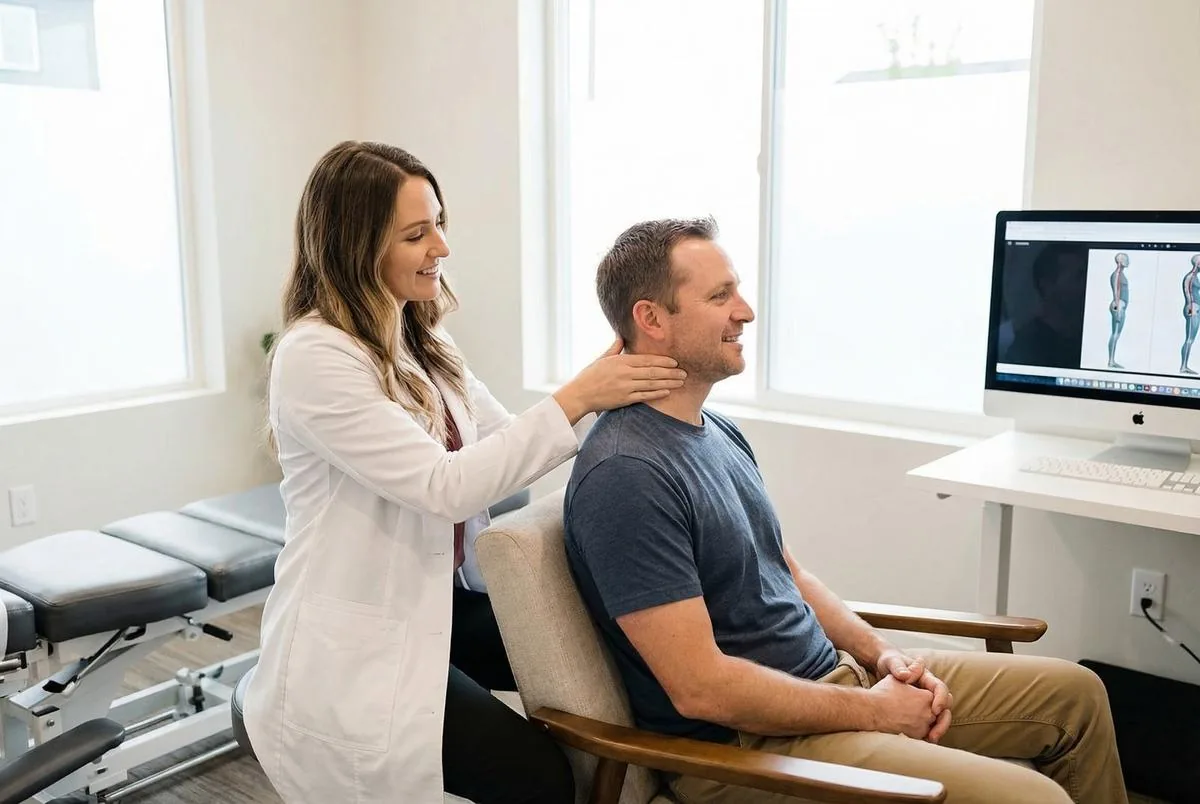
Neck Pain Chiropractor in Murray, UT
Care for text neck, stiffness, headaches, and postural or whiplash-related neck pain
Care for text neck, stiffness, headaches, and postural or whiplash-related neck pain
Neck pain often shows up after long hours at a desk, heavy phone use, awkward sleeping positions, stressful work periods, or an accident that never fully settled down. Some people feel stiffness turning the head. Others get pain at the base of the neck, shoulder-blade tension, headaches, or tingling that starts to move into the arm.
At Mecham Chiropractic, treatment begins with a clear look at how your cervical spine, upper back, shoulders, posture, and daily positions are working together. If your pain is being fed by a text neck pattern, whiplash history, or recurring upper cervical restriction, that needs to shape the plan.
Text neck is not just a catchy phrase. It describes the stress pattern that builds when the head spends too much time forward of the shoulders. That position increases load through the cervical spine, upper traps, and supporting tissues. Over time, the result is often stiffness, tension, headaches, and reduced tolerance for screen time or desk work.
Text neck treatment usually needs more than a quick stretch. It often involves restoring cervical and upper thoracic motion, calming overworked tissues, and giving you a better plan for monitor height, phone position, and work breaks.
Some neck pain is clearly postural. Some neck pain starts after a car accident, sports collision, or sudden impact. Whiplash can leave behind stiffness, headaches, protective muscle guarding, and pain that keeps returning months later. If your neck pain started after an accident, there may be overlap with our auto injury care, or, for a crash inside city limits, with our auto accident chiropractor in Salt Lake City.
Care may include gentle adjustments, targeted mobility work, soft tissue treatment, and simple changes to your daily setup. The best plan depends on whether your pain behaves more like a postural overload problem, a mobility restriction, a whiplash pattern, or a nerve-irritation issue.
Yes. A chiropractor can help text neck by improving motion in the neck and upper back, reducing muscle guarding, and addressing the postural habits that keep loading the same tissues every day.
Patients visit our Murray office from Salt Lake City, Holladay, Millcreek, Cottonwood Heights, Midvale, and surrounding neighborhoods for direct, movement-based care that fits both work life and active lifestyles. If you're searching for a chiropractor near you in Murray or anywhere in the Salt Lake Valley, our office is conveniently located and easy to reach from most neighborhoods.
Much of the discomfort people describe as neck pain sits in the muscles — the upper trapezius, levator scapulae, and suboccipitals that carry desk posture and stress. Our licensed massage therapist offers therapeutic massage with trigger point and myofascial work aimed at those muscles, which pairs well with chiropractic care when the joints are involved too.
Book a Neck Pain EvaluationTake the free 60-second Posture & Pain Scorecard →
Prefer to come in? Book a Free Spine & Posture Screening →
This page supports patient education and local service discovery. It is reviewed against the site's editorial policy, connects to Dr. Cody Mecham's background and certifications, and is paired with supporting content on delayed whiplash symptoms, post-accident headaches, and forward head posture and tech neck.
Yes. Chiropractic care can help text neck when screen posture is causing stiffness, headaches, posture strain, and reduced neck mobility.
Whiplash often causes neck stiffness, soreness, headaches, restricted motion, and pain that can refer into the shoulders or upper back after an accident.
Yes. Neck dysfunction can contribute to headaches, especially when the upper cervical joints and surrounding muscles stay irritated or restricted.
Desk work often increases forward head posture, upper trap tension, and reduced upper back movement, which places more load on the neck.
Neck pain should be evaluated when it keeps returning, limits head rotation, causes headaches, affects sleep, or starts producing symptoms into the arm.
Yes. Forward head posture and long hours at a desk or phone can put repeated stress on the neck and upper back.
Sleep position, pillow support, and existing cervical stiffness can all make neck pain more noticeable first thing in the morning.
Yes. Neck restriction commonly overlaps with upper trap and shoulder-blade tension, especially in posture-related cases.
Usually no. Self-cracking often moves the looser joints rather than the restricted one and does not address the real driver of the problem.
Yes. Neck stiffness, headaches, and soreness can appear hours or days after an accident once the initial stress response fades.