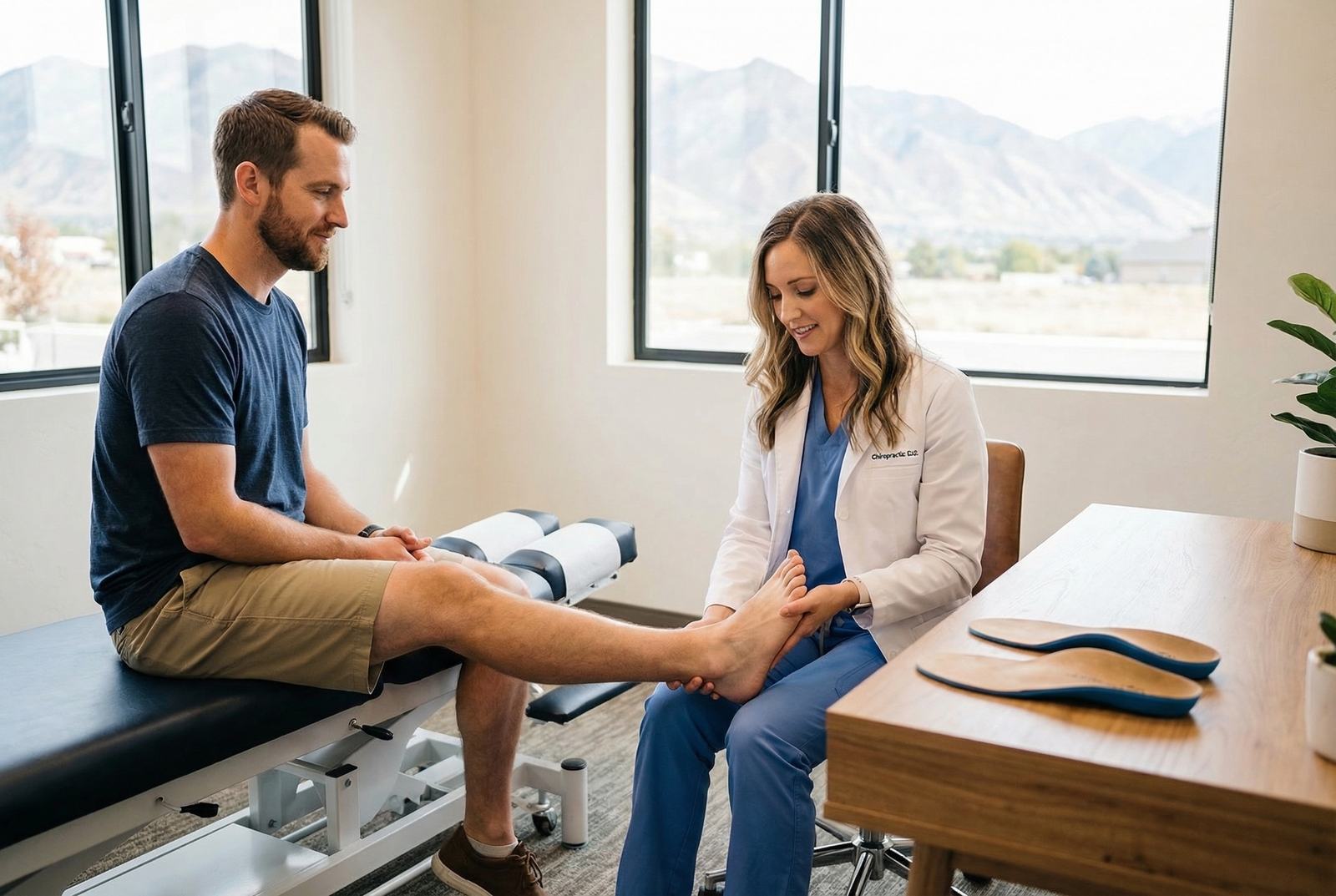
Plantar Fasciitis Chiropractor in Murray, UT
Foot pain, heel pain, and orthotics support built around how you actually move
Foot pain, heel pain, and orthotics support built around how you actually move
Foot pain affects the whole chain. When the arch, heel, or ankle is irritated, people often start limping, turning the foot out, shortening their stride, or shifting load into the knee, hip, and back. That is why stubborn foot pain rarely stays a foot-only problem for long.
At Mecham Chiropractic, foot pain care looks at both the painful tissue and the mechanics around it. If you are searching for a plantar fasciitis chiropractor, custom orthotics, or heel pain treatment, the real question is why the area keeps getting overloaded and what support will actually help.
Dr. Mecham's background includes Board Certified Chiropractic Extremity Practitioner training and Certified Orthotic Specialist training, which are especially relevant when foot mechanics, gait stress, and orthotic decisions are part of the problem. You can see the full credential breakdown on the Dr. Cody Mecham certifications page.
Plantar fasciitis often causes pain under the heel or arch, especially with the first few steps in the morning or after getting up from sitting. It can be irritated by repetitive walking, running, standing for long shifts, poor support, or restricted ankle mechanics.
Heel pain is not always the same thing as plantar fasciitis, but the two overlap often. The exam matters because different structures and loading patterns can produce similar pain locations.
When the foot is not controlling load well, the plantar fascia, calves, and even the knees can start compensating. That is why orthotics and movement guidance are often part of the discussion.
Custom orthotics are not about putting every patient in the same device. They are about giving the foot a better support environment when mechanics and repetitive load are part of the problem. Some patients need more shock absorption. Others need arch support or better control through gait.
Yes. A chiropractor can help plantar fasciitis by evaluating the foot, ankle, gait, and loading pattern, then combining treatment and support strategies such as soft tissue care, mobility work, and orthotic recommendations when appropriate.
Our Murray office is convenient for patients from Holladay, Millcreek, Cottonwood Heights, South Salt Lake, and nearby neighborhoods who want help with plantar fasciitis, heel pain, and custom orthotics. Runners, hikers, and athletes may also benefit from our sports injury chiropractic care alongside foot treatment. If you're searching for a chiropractor near you in Murray or anywhere in the Salt Lake Valley, our office is conveniently located and easy to reach from most neighborhoods.
Book a Foot Pain EvaluationThis page supports patient education and local service discovery. It is reviewed against the site's editorial policy, connects to Dr. Cody Mecham's background and certifications, and is paired with supporting content on the blog and education hub.
Yes. Chiropractic care can help plantar fasciitis by improving foot and ankle mechanics, reducing gait stress, and addressing support needs such as orthotics.
Morning heel pain is common with plantar fasciitis because the irritated tissues stiffen overnight and hurt with the first few steps.
Yes, they can. Custom orthotics may help when foot pain is being driven by poor support, repetitive overload, arch mechanics, or inefficient gait patterns.
Yes. Foot pain often changes how you walk, which can add stress to the knee, hip, and lower back.
Heel pain should be evaluated when it keeps returning, limits walking or standing, or starts affecting exercise, work shifts, or the rest of your movement pattern.
Yes. Plantar fasciitis often returns when the underlying load pattern, shoe support, or foot mechanics have not changed enough.
That pattern is common because the plantar tissues stiffen while resting and become painful when they are loaded again.
They can. Orthotics may reduce repetitive stress on the foot when support and load distribution are part of the problem.
Yes. Limited ankle motion can shift stress into the arch and heel and make plantar fasciitis or foot strain harder to calm down.
It is worth getting evaluated when foot or heel pain keeps returning, limits standing or walking, or starts changing how you move.